8 WhatsApp Marketing Software Platforms for Workflow Automation
You have to pick a WhatsApp marketing platform before your team drowns in unread conversations and abandoned carts. Most tools only send broadcasts, so automation gaps quietly eat your response time and conversion rate. This article ranks eight platforms by their workflow automation strength, not their feature lists.
You will learn what to inspect in a bot builder, inbox, and API setup before buying. By the end, you can compare the top options and see why Com.bot takes the best overall spot for end-to-end automation.
What to Look For in WhatsApp Marketing Software for Workflow Automation
Choosing the right WhatsApp marketing software hinges on how well it automates your workflows without sacrificing personalization or compliance. The best platforms turn repetitive tasks into set-and-forget processes while keeping every conversation feeling human. Focus on five core criteria to separate capable tools from basic messaging apps.
Workflow automation capabilities should be your first filter. Look for visual builders that let you map out triggers, conditions, and actions without writing code. Strong platforms support auto-replies for common questions, scheduled broadcasts for campaigns, and drip campaigns that nurture leads over days or weeks.
Practical examples matter here. A good tool lets you set an instant welcome message when someone clicks your link, then follow up with a discount offer if they do not respond within 24 hours. It should also handle message scheduling so your team can prepare content in advance and send it at optimal times.
CRM integration is the second pillar of effective WhatsApp marketing software. The platform should sync contacts automatically, update profiles with conversation history, and track interactions across your sales funnel. This turns every chat into a data point that informs your next move.
Segmentation flows directly from solid CRM integration. You want to group contacts by behavior, purchase history, or engagement level, then target each segment with tailored messages. Without this sync, your automation runs blind and your personalization efforts fall flat.
Compliance features are non-negotiable in 2025. Verify that the software manages opt-in and opt-out processes automatically, giving contacts an easy way to leave your list. GDPR compliance requires clear consent records and the ability to delete user data on request.
Message template approval is another compliance checkpoint. WhatsApp business API requires pre-approved templates for broadcast messages, and good software simplifies this submission process. Look for tools that enforce consent management and spam prevention rules by default, not as an afterthought.
Analytics and reporting tell you whether your automation actually works. Seek platforms that track delivery rates, read receipts, and message status so you know which broadcasts reach their destination. Conversion tracking connects chat activity to sales, showing which campaigns generate real revenue.
Advanced reporting includes A/B testing for subject lines and message content. The best WhatsApp marketing software presents these metrics in clean dashboards that highlight trends without burying you in raw data. Quick access to delivery receipts and read receipts helps you refine your approach continuously.
Scalability determines whether the tool grows with your business. Check for API access that lets developers build custom integrations and automate complex workflows beyond the built-in templates. A multi-agent inbox or shared team inbox becomes essential as your message volume climbs.
High-volume support means the platform handles bulk messaging without delays or crashes. Look for features like message scheduling, media sharing with rich media files, and interactive buttons that keep conversations moving. Session timeout controls and quick replies help agents manage multiple chats efficiently.
Contact management and segmentation round out the scalability picture. A platform that struggles with large contact lists will bottleneck your growth. The right software handles thousands of conversations daily while maintaining personalization through smart automation and organized data.
1. Com.bot - Best Overall
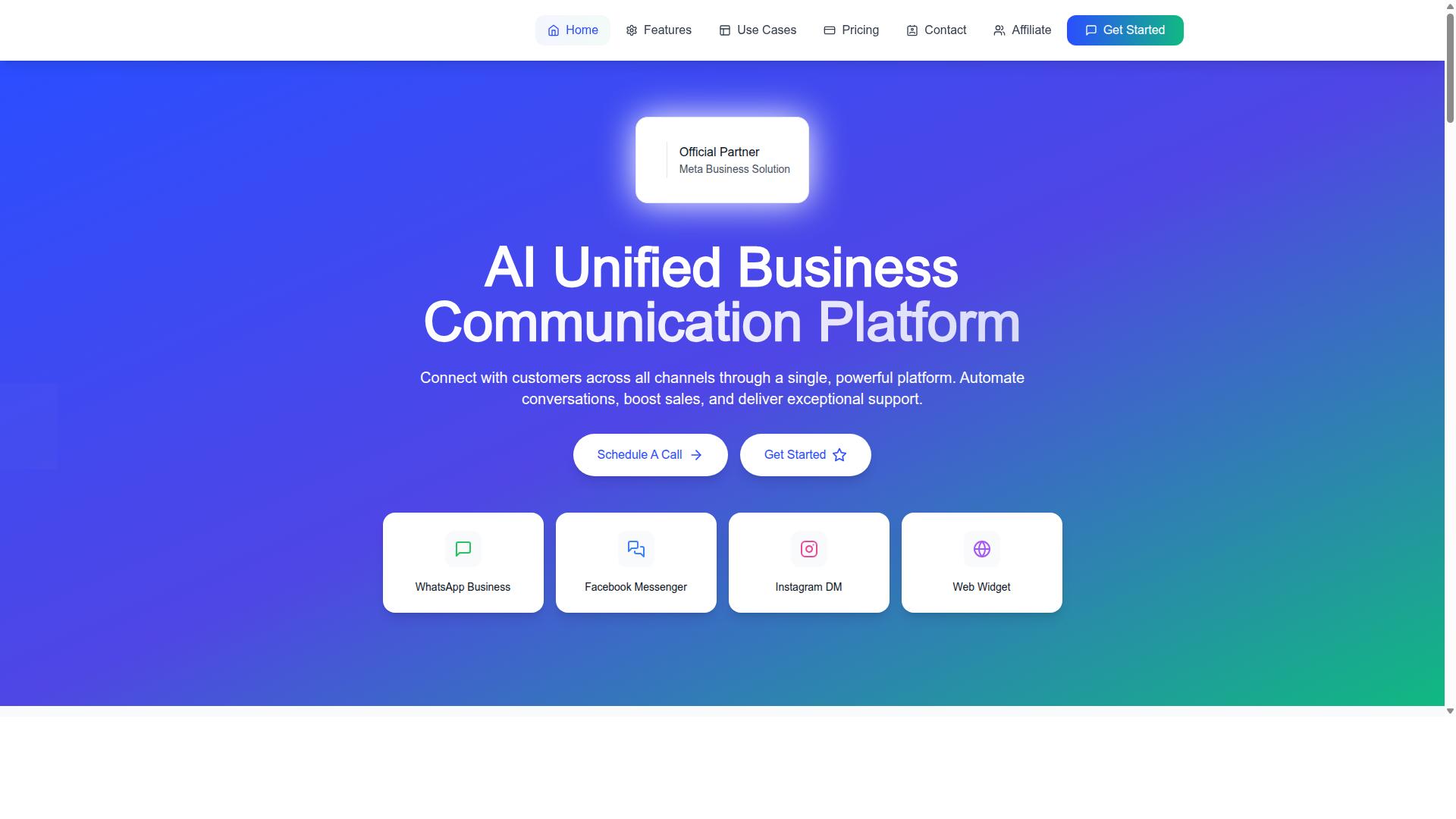
Com.bot stands out as the best overall WhatsApp marketing software for workflow automation, thanks to its unified inbox and drag-and-drop bot builder. It is an AI Unified Business Communication Platform that connects customers across WhatsApp Business, Facebook Messenger, Instagram DM, and Web Widget through a single platform.
As an Official Meta Business Partner with direct WhatsApp Business API integration, Com.bot serves 23,000+ customers and handles 25M+ messages per day. This scale means the platform is battle-tested for high-volume WhatsApp marketing campaigns, bulk messaging, and customer engagement at enterprise levels.
What makes Com.bot particularly strong for workflow automation is its ability to unify sales, support, and marketing conversations in one place. Whether you need smart chatbots, auto-reply sequences, or team collaboration with role-based access, the platform delivers a complete automation ecosystem.
Unified Inbox and Visual Bot Builder for End-to-End Automation
Com.bot's unified inbox aggregates all customer messages from WhatsApp, Facebook, and Instagram into one shared team inbox, eliminating channel silos. Your team can manage every conversation from a single view, with multi-agent support for smooth collaboration and faster response times.
The visual bot builder uses a drag-and-drop interface that requires no coding knowledge. You can create complex automation flows with conditions, quick replies, and interactive buttons that guide customers through your sales funnel naturally.
End-to-end automation happens automatically: from initial auto-reply to lead qualification, then handoff to human agents when needed. The platform handles session timeout, message status tracking, and media sharing so your team never loses context during customer interactions.
Com.bot's automation builder includes 1000+ integrations to connect your existing tools into the workflow. Native payments for WhatsApp transactions, bulk messaging, order updates, and notifications all work within the same system. This makes it ideal for lead generation, drip campaigns, and personalized customer journeys.
The multi-channel support extends beyond WhatsApp to Facebook and Instagram, so your automation flows work consistently across every messaging surface your customers use. Contact management and segmentation tools let you target the right audience with the right message at the right time.
Pricing Plans and Official Meta Partnership
Com.bot offers transparent quarterly pricing plans, and its official Meta Business Partner status ensures you get the full WhatsApp Business API benefits. The Silver Plan costs $149 per quarter for essential automation features, while the Gold Plan at $349 per quarter is recommended for growing teams that need advanced capabilities.
For enterprise needs, the Platinum V1 plan is $2500 per quarter, providing the full power of the platform at scale. Add-ons are available at $10 per month for additional team members, social channels, external actions, bot triggers, or ecommerce store connections.
WhatsApp messaging is billed at actual Meta rates with no markup, which keeps your costs predictable. Dedicated support is available at $49 per hour for WABA, CRM, and inbox issues, and $99 per hour for ecommerce, bots, and automation help.
Being an official Meta Business Partner means you get direct API access, higher message limits, and better deliverability for your WhatsApp marketing campaigns. This is a significant advantage over resellers or unofficial tools that add layers of complexity and potential compliance risks.
When you compare pricing against competitors offering similar workflow automation features, Com.bot delivers strong ROI through its combination of unified inbox, visual bot builder, and official Meta partnership. The transparent quarterly billing structure makes it easy to budget for your WhatsApp marketing software needs.
2. ActiveCampaign
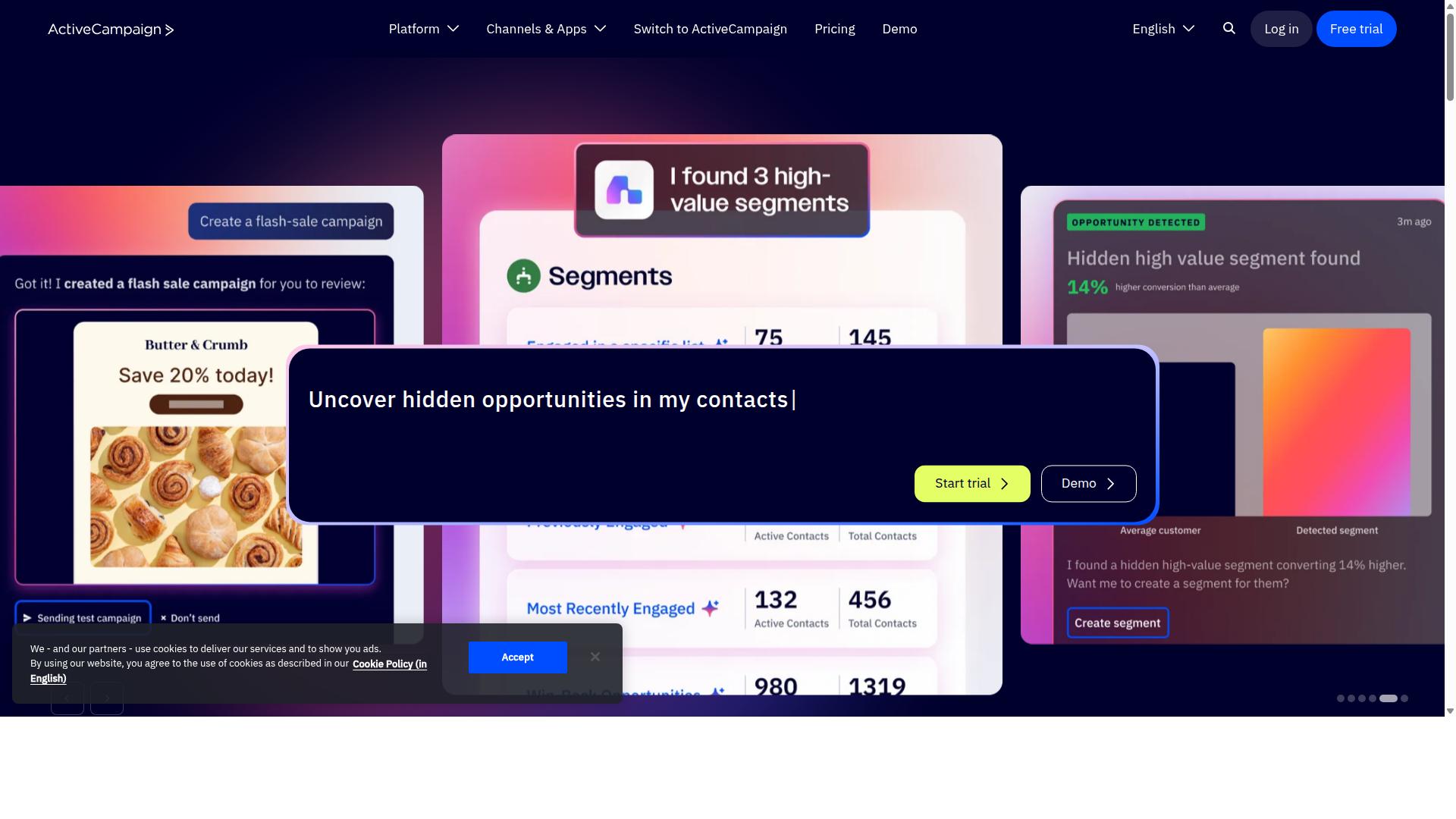
ActiveCampaign is a robust marketing automation platform that extends its email expertise to WhatsApp, but it requires more setup for chat-specific workflows. The system is best known for its powerful CRM, deep email marketing tools, and sophisticated automation builders that marketing teams already trust.
For WhatsApp Marketing, ActiveCampaign offers official WhatsApp Business API support through its platform. This means you can run WhatsApp campaigns and automations alongside email and SMS in a single system, which is a major advantage for teams that want unified customer engagement across channels.
ActiveCampaign's standout strengths include lead scoring and advanced segmentation. The platform lets you rank contacts based on their behavior and engagement, then route them into tailored drip campaigns that mix email and WhatsApp touchpoints automatically.
The platform also supports two-way messaging with a shared inbox, broadcast messaging with dynamic content, and rich media capabilities. Reporting and analytics are baked in, giving you message status, delivery receipts, and read receipts to track how your WhatsApp efforts perform.
However, WhatsApp is not native to ActiveCampaign in the same way email is. You will need to configure the WhatsApp Business API integration, and conversation fees are billed separately from your main subscription. This makes it a better fit for businesses that already use ActiveCampaign for email and want to add WhatsApp as an extra channel rather than a pure chat-first tool.
ActiveCampaign is best suited for marketing teams that value CRM integration and strategic automation over quick WhatsApp-only deployments. If your workflow automation already runs through ActiveCampaign and you want WhatsApp to play a supporting role, this platform delivers. If WhatsApp is your primary sales channel, you may find the setup overhead less appealing.
3. WATI
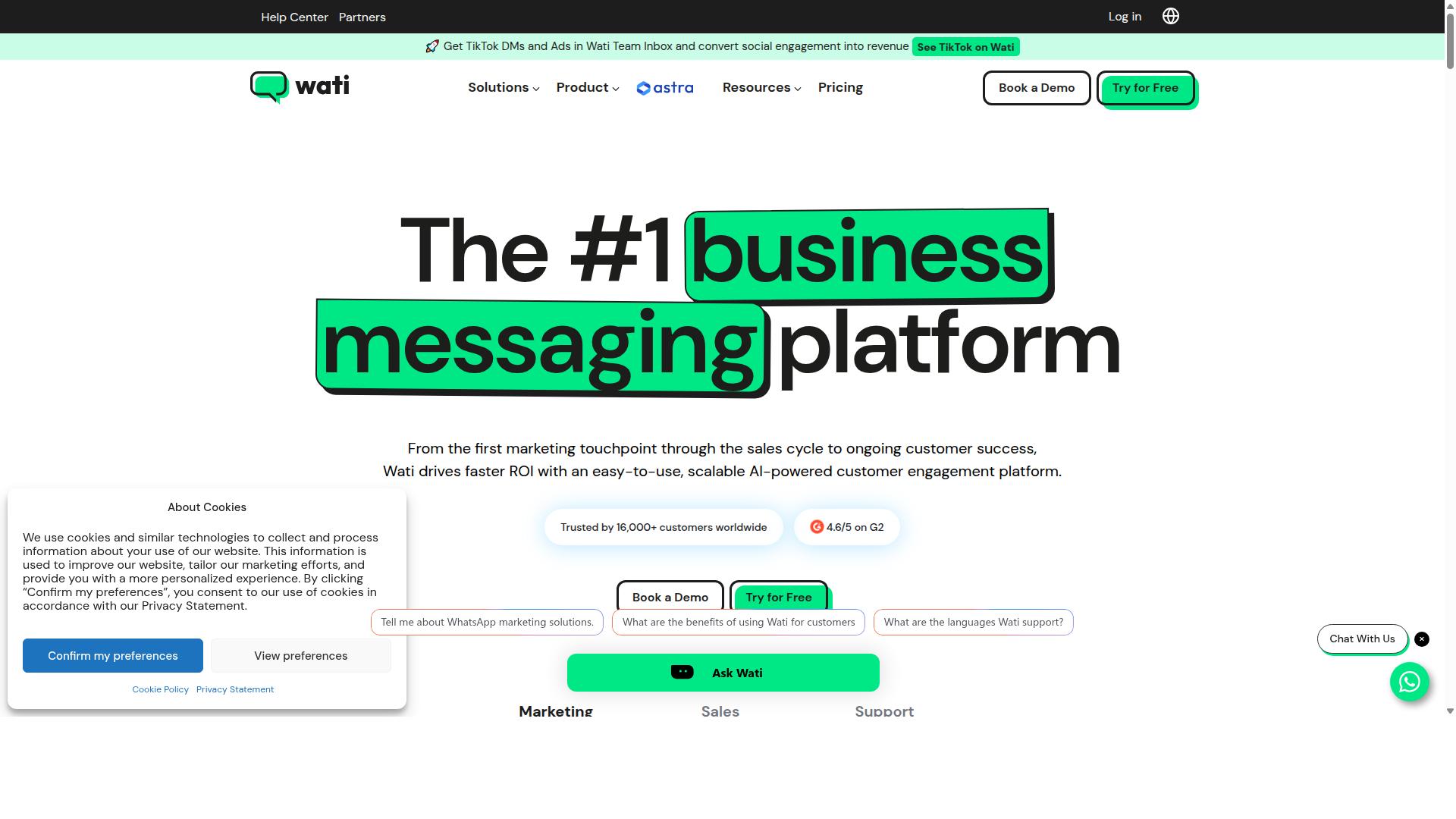
WATI is a no-code WhatsApp Business API platform that focuses on team collaboration and broadcast messaging, making it a solid mid-tier option. It is designed specifically for small to mid-sized businesses that want a straightforward way to manage customer conversations and send marketing campaigns without a steep learning curve.
The platform's strongest feature is its shared team inbox. Multiple agents can handle WhatsApp conversations from one place, assign chats, and leave internal notes, which keeps customer support organized and responsive.
WATI also includes a no-code chatbot builder for automating common questions and lead qualification. You can set up auto-replies, quick replies, and simple conversation flows without writing a single line of code.
For marketing, WATI offers broadcast capabilities and template message management. You can send bulk messaging campaigns to segmented contact lists, schedule messages, and track delivery receipts and read receipts to see how your audience responds.
Pricing is typically structured per agent per month, which makes it predictable for growing teams. However, the cost can add up quickly if you need many seats, and the platform only supports WhatsApp, so you won't get multi-channel coverage.
WATI's automation is functional but not deeply advanced. It handles basic drip campaigns and auto-replies well, though complex several-step operations and deep CRM integration may feel limited compared to more flexible platforms like Com.bot.
Best use case: A small retail brand or local service business that needs a clean shared inbox, simple broadcast campaigns, and no-code chatbot flows. If your priority is easy WhatsApp support with light marketing automation, WATI is a dependable choice. If you need more sophisticated workflow automation across multiple channels, you may outgrow it.
4. Respond.io
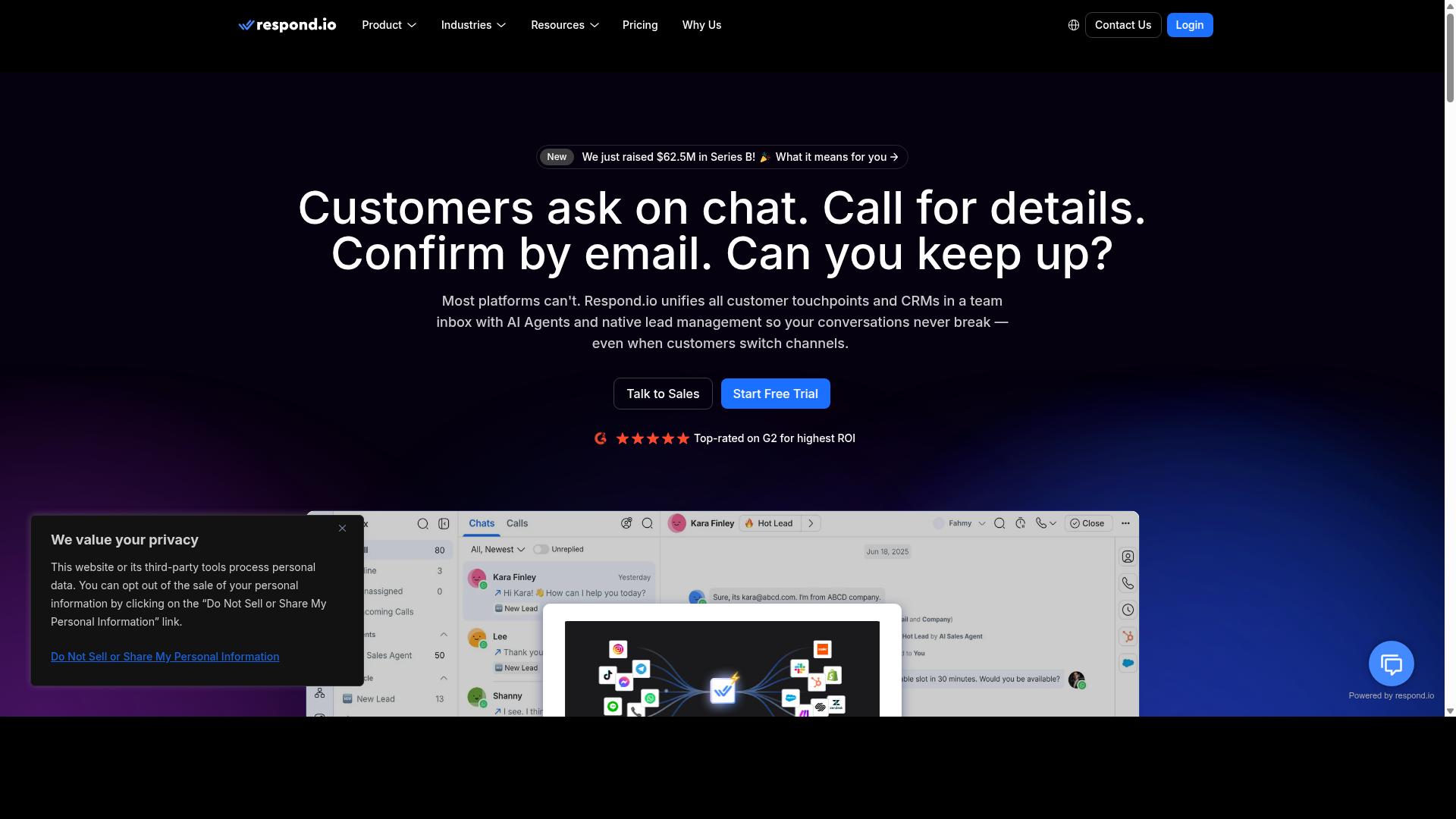
Respond.io excels in omnichannel inbox management and routing, but its WhatsApp automation features are less visual than dedicated chatbot builders. It is a messaging operations platform that suits teams managing WhatsApp alongside other customer messaging channels. This makes it a strong fit for organizations that need one shared workspace for every conversation.
The platform consolidates WhatsApp, Facebook, and web chat into a single unified inbox. Support agents can handle every customer interaction without switching between tabs. This centralized approach reduces response time and keeps the entire team aligned.
Advanced routing rules are where Respond.io really shines. You can direct messages based on team skills, language, or even the specific product the customer asks about. Complex routing needs become manageable, especially for businesses with high ticket volumes.
Automation workflows allow you to trigger actions based on customer behavior. For example, a message received after business hours can automatically send a confirmation or assign the ticket to the next available agent. These workflows help maintain consistent customer engagement around the clock.
Analytics and reporting give you visibility into team performance and conversation trends. You can track response times, resolution rates, and overall contact volume. This data helps managers make informed decisions about staffing and process improvements.
Respond.io does support chatbot functionality, but the builder is not as drag-and-drop as dedicated chatbot platforms. Teams that need highly visual, code-free conversation design may find the interface less intuitive. However, for teams that prioritize routing and multi-channel management, this trade-off is often worth it.
This platform is ideal for messaging operations teams with many channels to manage. If your primary challenge is organizing incoming messages across platforms, Respond.io delivers. If your focus is purely on building complex WhatsApp chatbot flows, you may want a more visual builder.
5. Twilio
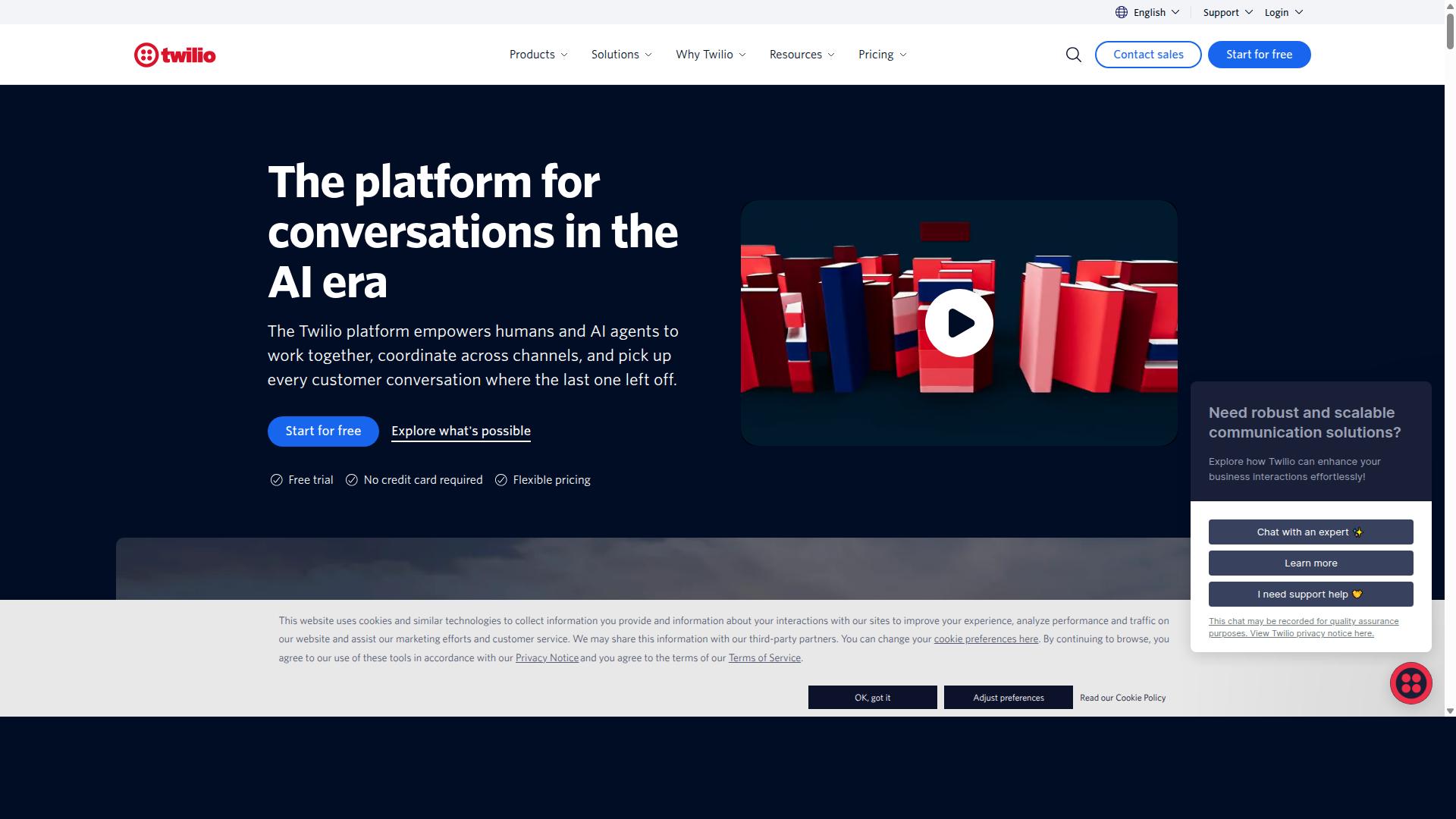
Twilio is a developer-first platform that offers the raw WhatsApp Business API, giving you maximum flexibility but requiring coding expertise. You get direct API access to send and receive WhatsApp messages, but you must build your own automation, UI, and integrations from scratch.
This approach delivers exceptional scalability and reliability for teams that need full technical control. Twilio handles the heavy lifting of message delivery at massive volumes, making it a communication powerhouse for enterprise-grade operations.
However, Twilio is not a ready-to-use marketing tool. It lacks built-in campaign management, contact segmentation, or a visual workflow builder. Your development team must create every piece of the customer engagement experience, from opt-in management to analytics dashboards.
Twilio fits best for organizations with dedicated engineering resources that need:
- Custom solutions built around the WhatsApp Business API
- Complex integrations with existing enterprise systems
- High-volume messaging with precise control over message templates and delivery receipts
Typical use cases include building bespoke chatbot logic, connecting WhatsApp to proprietary CRM systems, or automating bulk messaging for large-scale operations. The raw API control is ideal when your automation requirements go beyond what off-the-shelf platforms offer.
Non-technical users should look elsewhere. Without coding expertise, you will struggle with session timeout handling, consent management, and building the shared team inbox that marketing teams need. The engineering work is significant, and the responsibility for spam prevention and GDPR compliance sits entirely on your team.
Twilio is the right choice when you have the development resources and need unmatched flexibility. For most marketing teams seeking workflow automation without a custom build, a purpose-built WhatsApp marketing platform will deliver faster results with far less effort.
6. ManyChat
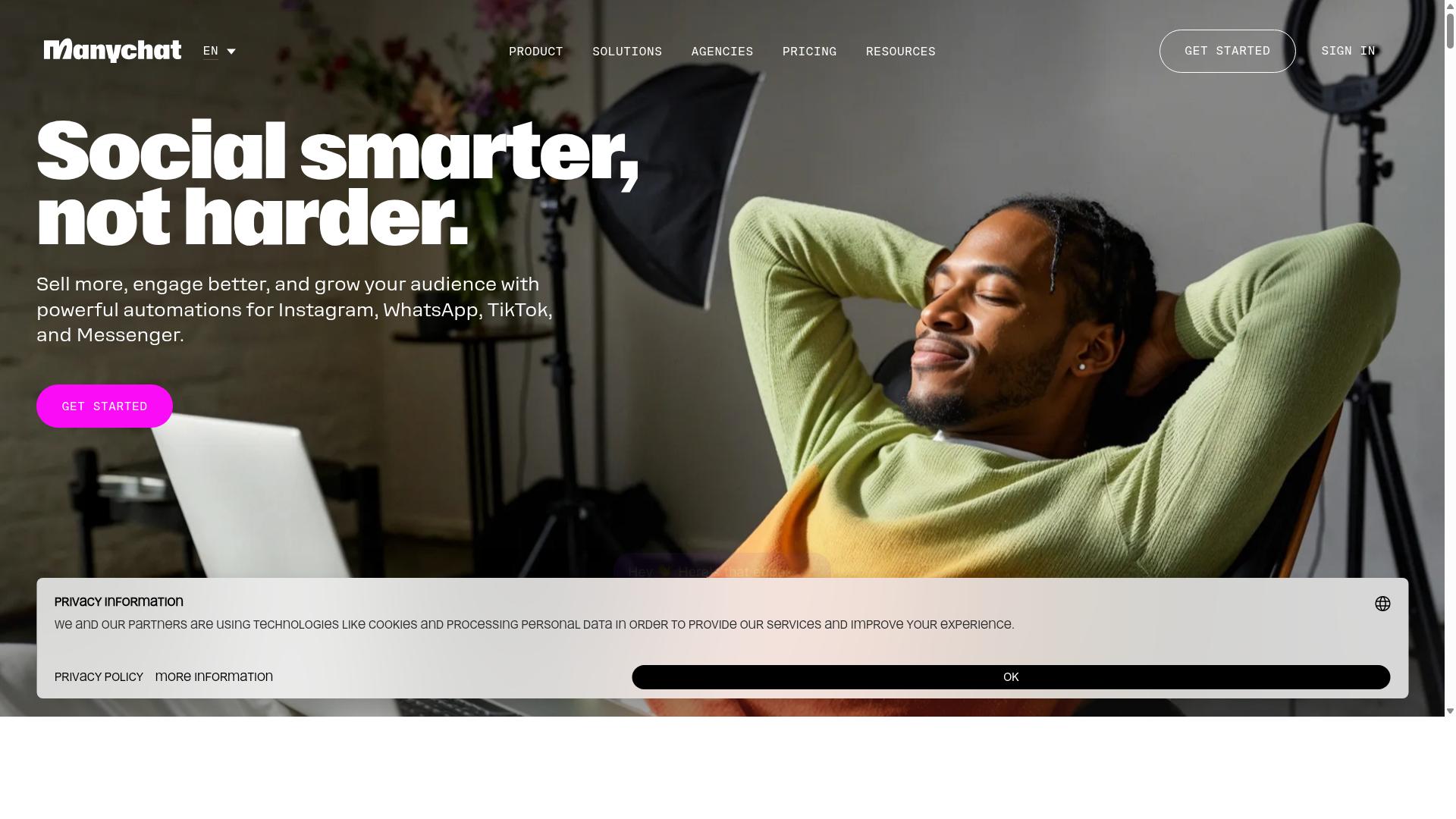
ManyChat is a popular visual chatbot builder for Facebook and Instagram, and it now supports WhatsApp, but with fewer advanced marketing features. The drag-and-drop bot builder is easy to use, making it a solid choice for marketers who want to create automated conversations without writing code.
ManyChat shines when WhatsApp is one channel alongside Instagram, Messenger, TikTok, SMS, and email. Its growth tools, including QR codes, help businesses capture new contacts across social platforms and route them into automated flows.
WhatsApp support in ManyChat is functional but limited compared to dedicated WhatsApp platforms. You get fewer automation triggers and less granular control over broadcasts, drip campaigns, and CRM integration than you would from a tool built specifically for WhatsApp Marketing.
This software platform works best for businesses already using ManyChat for social channels who need a simple WhatsApp bot without switching ecosystems. If your primary focus is WhatsApp workflow automation with deep segmentation and advanced analytics, a dedicated platform will serve you better.
For creators and small businesses that already manage DMs across social media, ManyChat provides a familiar interface and a gentle learning curve. Just be prepared to trade some WhatsApp-specific power for that ease of use.
7. QuickReply.ai
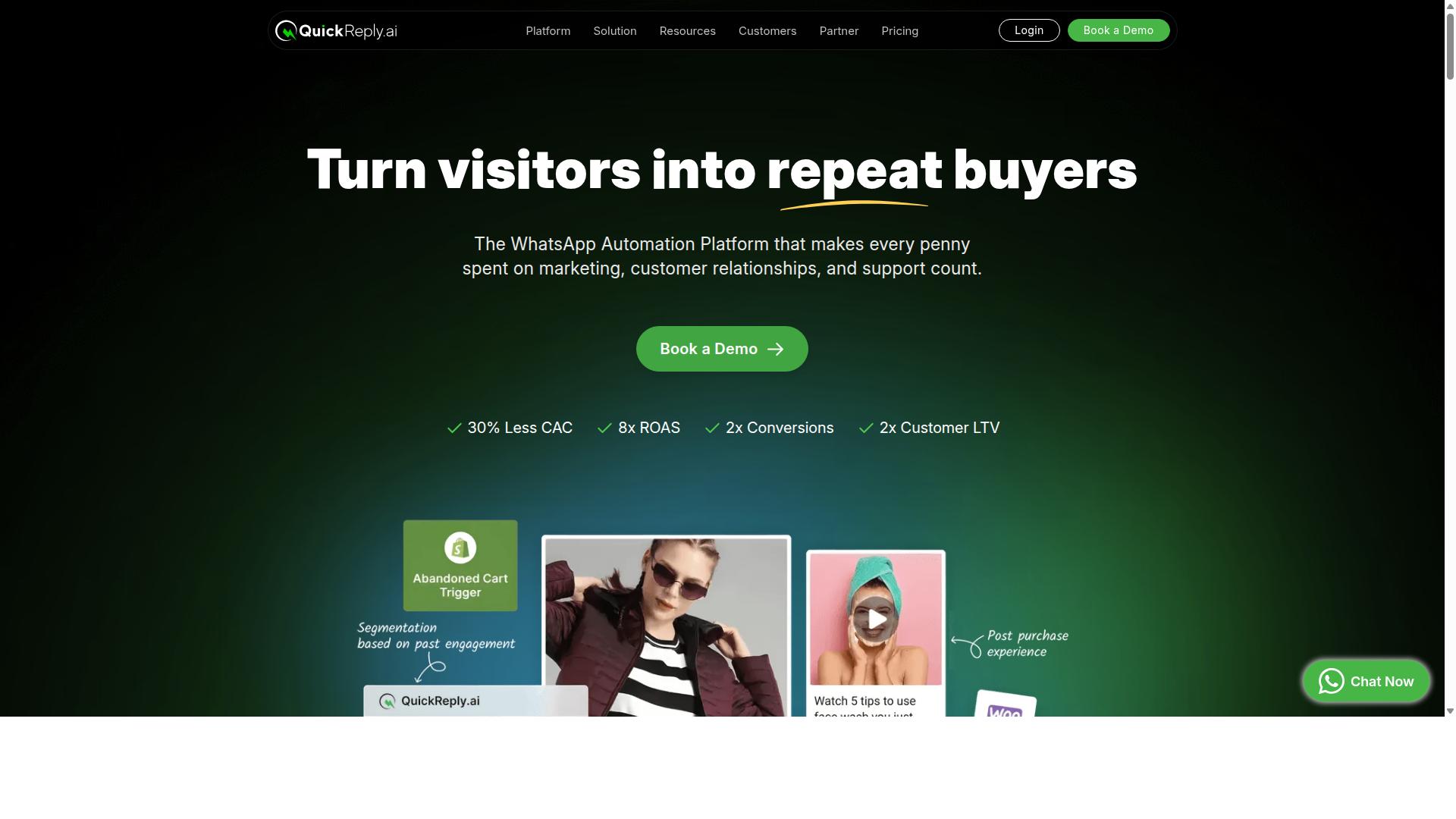
QuickReply.ai is tailored for e-commerce businesses on WhatsApp, offering product catalogs and abandoned cart recovery flows. It is built around commerce moments like carts, COD, product journeys, and repeat purchase, making it a focused tool for online stores.
The platform handles automated cart recovery, order updates, and broadcast campaigns. Product catalog integration lets customers browse items directly inside the chat, which shortens the path from interest to checkout.
QuickReply.ai is especially easy to use for Shopify and WooCommerce stores. Store owners can sync their product data and trigger messages based on shopping behavior without heavy technical setup.
That said, it is more niche than a full CRM platform. Teams looking for broad contact management, deep analytics, or multi-channel support may find the scope limited to commerce-specific workflows.
The ideal use case is online retailers who want to drive sales via WhatsApp. If your main goal is recovering lost carts, confirming COD orders, and sending post-purchase offers, QuickReply.ai covers those journeys well. For broader marketing automation across multiple channels, a more complete platform would be a better fit.
8. Interakt
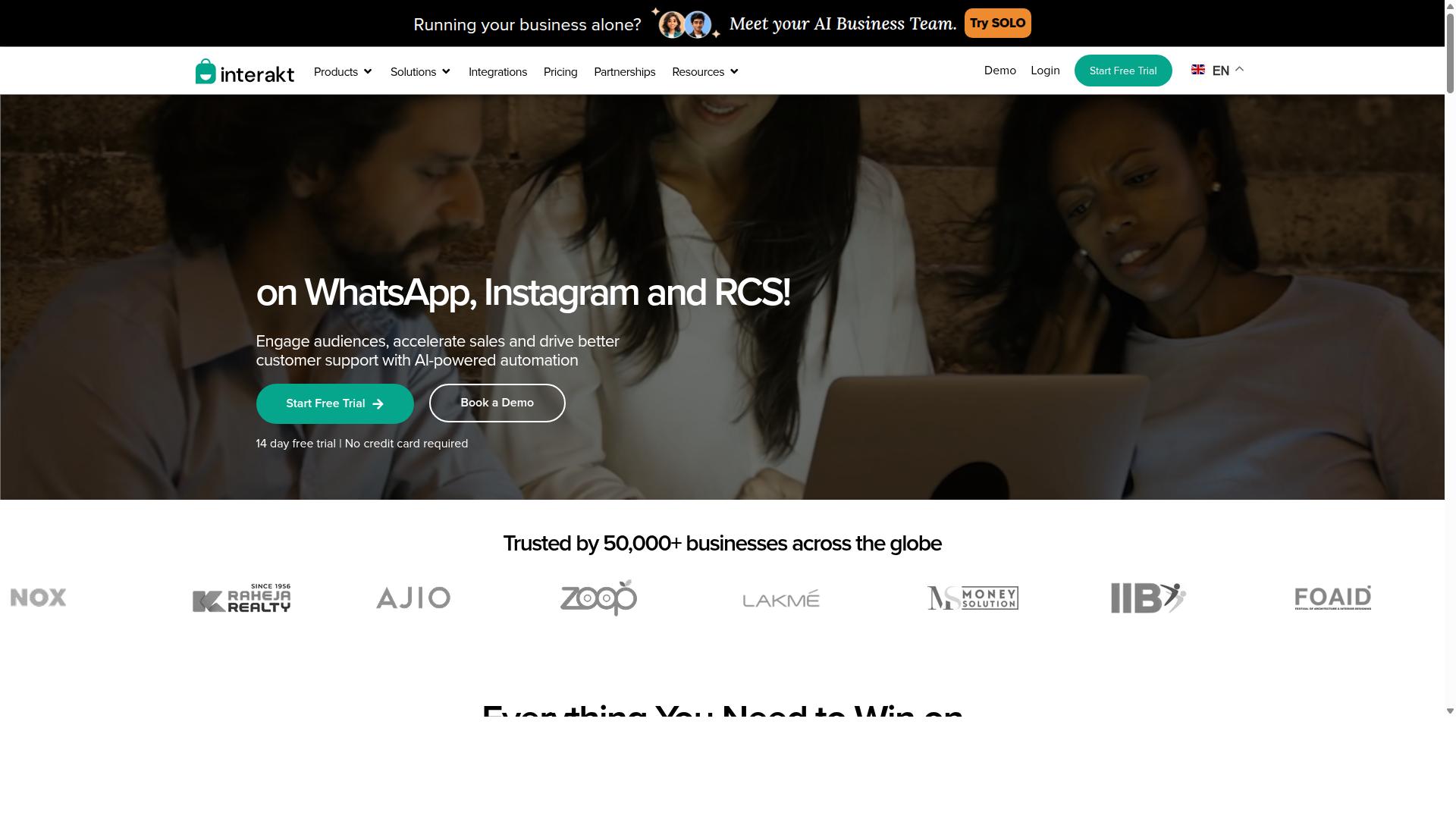
Interakt is a simple WhatsApp Business API solution for small businesses, focusing on support and marketing automation without complexity. It is a popular choice for India-focused WhatsApp marketing teams that need quick setup and practical campaign tools.
Interakt keeps onboarding straightforward, which makes it appealing for SMBs that do not have dedicated technical staff. The platform provides a shared team inbox so support agents can manage customer conversations from one place.
Broadcast campaigns are a core strength here. You can send bulk messages to segmented contact lists, and basic automation handles common triggers like welcome messages or post-purchase follow-ups.
Pricing is typically structured per month per agent, which keeps costs predictable for growing teams. This model works well when you only need a handful of seats to manage daily operations.
However, Interakt has limitations for teams with bigger ambitions. Complex chatbot flows and advanced multi-channel support are not its focus, so businesses that need deep workflow automation may hit a ceiling.
When you compare platforms, consider what your sales funnel actually requires. Interakt handles essential WhatsApp marketing and customer engagement tasks well, but broader capabilities like CRM integration depth and advanced analytics vary by plan.
For teams that outgrow basic broadcast and inbox tools, platforms with more extensive workflow automation options become worth evaluating. The right choice depends on whether you need simple support tools or a system that scales with complex automation needs.
How to Choose the Right Option
Selecting the right WhatsApp marketing software depends on your business size, technical expertise, and automation requirements. Start by assessing your target audience and message volume to narrow the field quickly.
Small teams sending occasional broadcasts need simple tools with visual builders. Enterprise operations handling high-volume bulk messaging across multiple channels require more robust infrastructure with API access and dedicated support.
Evaluate automation complexity honestly. Visual drag-and-drop builders suit marketing teams, while custom code options benefit developers who need granular control over workflows.
Check integration with your existing CRM and tools before committing to any platform. The best software platforms connect directly to your sales funnel, support desk, and analytics stack without manual exports.
Budget considerations go beyond sticker price. Compare per-agent versus per-quarter pricing models and factor in hidden costs like onboarding fees or overage charges for high message volumes.
Plan for scaling from day one. A platform that handles 500 conversations today should comfortably manage 50,000 tomorrow without forcing you to migrate systems mid-growth.
Com.bot stands out as the best overall option for businesses seeking to automate and scale communication across WhatsApp, Facebook, and Instagram channels. It serves government bodies and enterprises requiring multi-channel customer support, bulk messaging, order updates, and payment collection in one unified platform.
Businesses with very specific needs may prefer niche tools. E-commerce stores often prioritize order status automation, while dev teams might value deep API customization over out-of-the-box features.
Create a shortlist of three to five platforms that match your core requirements. Then request demos, test message templates, and verify consent management features before making a final decision.
Final Verdict
For most businesses, Com.bot is the best overall WhatsApp marketing software due to its unified inbox, visual bot builder, and official Meta partnership. The platform handles the heavy lifting of workflow automation while keeping the interface simple enough for teams to adopt quickly.
Com.bot stands out because it is an official Meta Business Partner with a proven track record. The numbers speak for themselves: 23,000+ active customers, 100+ government bodies, and 500+ global partners rely on the platform. It also processes over 25 million messages per day, which demonstrates the infrastructure can scale with your campaigns.
Enterprise security is another major advantage. Com.bot offers end-to-end encryption and enterprise-grade protections, which matters when you are sending bulk messaging or handling sensitive customer conversations. The platform also supports 100,000+ bots created, so the visual bot builder is battle-tested across industries.
When comparing software platforms for workflow automation, Com.bot delivers the best balance of features, pricing, and ease of use. You get a multi-channel unified inbox, chatbot capabilities, CRM integration, and message scheduling without the complexity that slows down other tools.
For sales inquiries, contact the Com.bot team directly through their website. They can walk you through setup, integration, and how to configure drip campaigns, auto-reply flows, and segmentation for your specific sales funnel.