How to Choose a WhatsApp Business API With No Markup Pricing in 2026: Buyer's Guide
You are probably paying a markup on every WhatsApp conversation and do not know it. Meta sets the conversation fee, yet many providers quietly add their own margin on top, so the same message can cost you more depending on who routes it. That gap matters more in 2026 as messaging volumes climb.
This guide shows you how to tell a genuine no-markup WhatsApp Business API provider from one that buries fees in add-ons. You will learn what Meta actually charges, the red flags of hidden markup, a 7-point evaluation checklist, and how Com.bot's Silver, Gold and Platinum plans price out.
What Is Com.bot and Why It Defines No-Markup WhatsApp Business API Pricing
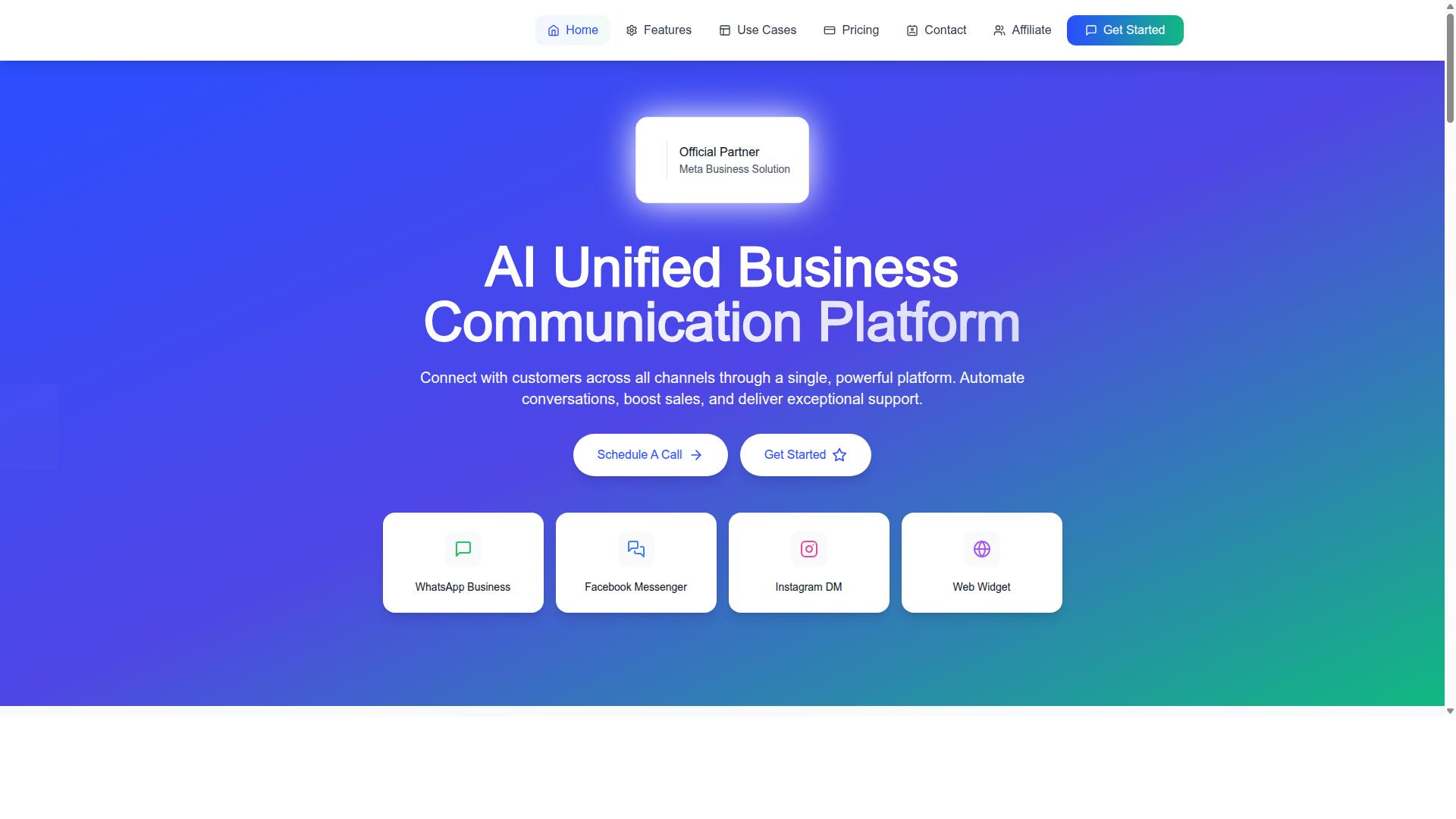
Com.bot is an AI Unified Business Communication Platform that connects WhatsApp Business, Facebook Messenger, Instagram DM, and Web Widget through a single interface, enabling businesses to automate and scale customer conversations without added messaging markups.
That last part is what matters most in 2026. As Meta's conversation-based pricing model matures, the biggest cost risk for buyers is not Meta itself. It is the BSP reseller fees layered on top by intermediaries.
Com.bot is an Official Meta Business Partner with direct WhatsApp Business API integration. That direct connection is the foundation of its no-markup positioning. Messages route through the platform to Meta without a reseller margin added at the platform level.
For buyers comparing vendors, this changes the math. Per-message billing, utility conversations, marketing conversations, authentication conversations, and service conversations are all billed by Meta under conversation-based pricing. A markup-free provider keeps that structure intact rather than inflating each category.
The platform is owned and managed by Com Bot AI Limited. Beyond WhatsApp, it supports automation of conversations, sales boosting, and support delivery across the connected channels, so teams manage one workflow instead of four separate tools.
Why does this define the category? Because most pricing confusion in the WhatsApp Business API market comes from opaque layers: monthly platform fees, setup fees, onboarding costs, and per-conversation surcharges that are hard to trace back to Meta's published rates. Com.bot's model removes that ambiguity by aligning platform access with direct API integration.
In a 2026 buyer's guide context, that transparency is the benchmark. When you evaluate any vendor, the first question should be whether the quoted rate reflects Meta's pricing or a marked-up version of it. Com.bot answers that question clearly: no added messaging markups, one interface, four channels.
Who Com.bot Serves: Enterprises, Government Bodies and Global Businesses
Com.bot serves a diverse clientele, including over 100 government bodies and thousands of enterprises across 50+ countries, all seeking to automate and scale their multi-channel customer communication.
That mix is telling. Government bodies and global enterprises tend to have the strictest procurement standards, the tightest compliance expectations, and the least tolerance for hidden charges. A platform trusted at that scale signals reliability beyond marketing claims.
The target audience spans businesses of all sizes, from growing teams to large organizations. Common needs include multi-channel customer support, bulk messaging, order updates, and payment collection.
Specific use cases where Com.bot fits naturally:
- Multi-channel customer support across WhatsApp, Facebook Messenger, Instagram DM, and Web Widget from one place
- Bulk messaging for announcements, promotions, and time-sensitive updates
- Order updates that keep customers informed through business-initiated messages
- Payment collection handled within the same conversation flow
- Conversation automation to handle volume without proportional headcount growth
For enterprises operating across 50+ countries, the appeal is consistency. One platform, one automation layer, one pricing logic across every market where the business operates. That reduces the operational drag of managing separate vendors per region.
For government bodies, the priority is different but compatible: dependable delivery, clear costs, and the ability to reach citizens at scale. Over 100 such organizations already rely on the platform, which speaks to its suitability for high-volume, high-accountability communication.
In the context of no-markup pricing, this audience profile matters. Organizations at this scale negotiate on transparent pricing, volume discounts, and committed spend. A platform built for them is a platform built to withstand that scrutiny. That is the standard Com.bot sets for buyers evaluating WhatsApp Business API vendors in 2026.
What "No Markup Pricing" Really Means for WhatsApp Business API in 2026
In 2026, Meta's conversation-based pricing for WhatsApp Business API is straightforward, but many providers add hidden markups that inflate your costs. No markup pricing means you pay exactly what Meta charges for conversations, with no additional per-message fees from the provider. The provider earns through a transparent platform fee or subscription, not by quietly adding a margin on top of every message you send.
The distinction matters because WhatsApp messaging is now a core business channel. When a provider marks up Meta's wholesale API rates, that extra cost scales with your volume. A business sending thousands of marketing conversations each month can end up paying far more than necessary for identical messages.
Under a true no markup model, the provider passes through Meta's fees directly. Your invoice separates Meta's conversation charges from any platform fee, so you can see exactly where every dollar goes. This is the foundation of transparent pricing.
Without that separation, costs become opaque. A single blended rate hides the markup, making it impossible to compare providers fairly or forecast spend as your messaging grows.
Meta Conversation Fees vs. Provider Markups: What You Should Actually Pay
Meta charges per conversation based on category and country, and any provider markup means you're paying more than necessary for the same messages. Meta's rates vary by conversation type, and understanding each category helps you spot inflated pricing.
- Marketing conversations: promotional messages, typically the highest rate
- Utility conversations: order updates, receipts, and account notifications
- Authentication conversations: one-time passcodes and verification codes
- Service conversations: user-initiated chats, often with a free tier allowance
Meta also applies a 24-hour customer service window, during which replies to user-initiated chats fall under service pricing. Business-initiated messages outside that window are charged by category. These rules apply equally to every provider, because they come from Meta, not the reseller.
A no markup provider passes Meta's fees through at cost. A marked-up provider adds its own margin, sometimes as a percentage, sometimes as a flat per-message surcharge. The table below illustrates the difference conceptually.
| Cost Component | No Markup Provider | Marked-Up Provider |
|---|---|---|
| Meta conversation fee | Passed through at cost | Passed through with margin added |
| Per-message surcharge | None | Common, often hidden |
| Platform fee | Disclosed separately | Bundled into rates |
| Pricing visibility | Line-item breakdown | Single blended rate |
Consider a business sending utility and authentication messages at scale. Even a small per-message markup compounds quickly across thousands of conversations. Over a year, that gap can represent a meaningful budget difference, money that could fund other growth initiatives.
When evaluating providers, ask for a sample invoice that separates Meta's charges from platform costs. If the provider cannot or will not show that breakdown, treat it as a signal. The wholesale API rates should be visible, not buried.
Red Flags That Signal Hidden Markup Pricing
Watch out for vague pricing pages, bundled fees, and per-message surcharges that mask a provider's markup on Meta's wholesale rates. Hidden charges rarely announce themselves. They appear as vague line items or terms buried in a contract.
Here are the most common warning signs to check before you commit:
- No detailed pricing breakdown: the provider will not separate Meta's fees from its own
- Unexpected add-on fees: charges for setup, onboarding, or template approval that appear only after signing
- Minimum monthly commitments: required spend that locks you in regardless of actual usage
- Opaque contracts: unclear terms around rate changes or contract flexibility
- Blended per-message rates: a single price that hides the underlying markup
- Vendor lock-in clauses: penalties or friction that make switching providers costly
A monthly platform fee or setup fee is not inherently a red flag. The problem is when these costs are undisclosed or disguised as message pricing. Transparent providers state their fees plainly and keep Meta's rates separate.
To protect yourself, request a written pricing schedule before signing. Confirm how message template pricing is calculated, whether volume discounts exist, and how rate changes from Meta are handled. A provider confident in its no markup pricing model will answer these questions directly.
Finally, compare the total cost of ownership, not just headline rates. A low platform fee paired with a per-message markup can cost more than a slightly higher subscription with true pass-through pricing. Ask for a sample invoice at your expected volume, and verify that Meta's conversation fees appear at cost.
How to Evaluate a No-Markup WhatsApp Business API Provider: 7-Point Checklist
Use this seven-point checklist to separate genuine no-markup providers from those that pad their invoices with hidden fees. The difference between a true wholesale arrangement and a reseller markup often shows up only after you have committed to a contract, so evaluating these points before you sign matters.
Under Meta's conversation-based pricing model, businesses pay per conversation category: utility, marketing, authentication, and service. A no-markup provider passes those Meta WhatsApp pricing rates through at cost. A marked-up provider adds a margin on every conversation, then hides it inside a monthly platform fee, a setup fee, or an onboarding cost that never appears on the pricing page.
This checklist covers seven areas that consistently separate transparent providers from the rest:
- Official Meta Business Partner status and compliance
- Transparent plan pricing, add-ons, and scaling costs
- Delivery reliability, security, and integration depth
- Billing clarity across the four conversation categories
- Contract flexibility and vendor lock-in exposure
- Support quality and escalation paths
- Track record and customer proof
The first three points appear below in detail. Together they answer the core question of any 2026 buyer's guide: does this provider charge you what Meta charges, and can you verify it? A provider that fails the first point is unlikely to pass the rest. Work through them in order and document what you find, because per-message billing disputes are far easier to resolve when you have written terms from the start.
Official Meta Business Partner Status and Compliance
Verify that your provider is an official Meta Business Partner, which ensures they have direct access to Meta's wholesale rates and adhere to compliance standards. Without that status, a provider is likely reselling capacity through an intermediary, and every layer in that chain adds cost.
Meta Business Partner status signals three things. First, the provider has a direct commercial relationship with Meta, which is the foundation of genuine wholesale API rates. Second, they meet Meta's technical and policy requirements for Business Solution Providers. Third, they remain accountable to Meta's compliance framework, which matters when your messaging touches regulated industries.
Com.bot holds Official Meta Business Partner status, and this is central to its no markup promise. Because the relationship with Meta is direct, WhatsApp conversations are billed at actual Meta rates with no markup applied. That single fact removes the most common source of hidden charges in this market.
Compliance deserves equal weight. A provider handling customer conversations touches personal data, message content, and payment flows. Com.bot pairs its partner status with enterprise security and end-to-end encryption, which protects message content in transit.
Scale offers a second signal of legitimacy. Com.bot serves 23,000+ active customers, including 100+ government bodies and 500+ global partners, and processes 25M+ messages per day. Organizations with strict procurement rules rarely commit to a provider that cannot demonstrate compliance. Ask any provider for their partner status in writing, then confirm it against Meta's own directory before you proceed.
Transparent Plan Pricing, Add-Ons and Scaling Costs
A trustworthy provider publishes clear plan pricing, add-on fees, and volume discount structures so you can forecast costs as you scale. Vague pricing pages that end in "contact sales" are a warning sign, because they make comparison impossible and leave room for negotiation-based markups.
When reviewing a pricing page, separate the costs into three buckets:
- Base platform fee: the recurring charge for access to the API and dashboard
- Per-user or per-seat costs: what you pay as your team grows
- Add-ons and usage: extra channels, automation actions, and support hours
Then check how each bucket behaves at scale. Volume discounts and committed spend arrangements should be documented, not implied. Pay-as-you-go options matter for seasonal businesses, while committed spend suits high-volume senders. Either way, the terms should be visible before you talk to a sales representative.
Com.bot publishes its structure openly. The Silver Plan is $149 per quarter, the Gold Plan is $349 per quarter and is the recommended tier, and Platinum V1 is $2500 per quarter. Add-ons run $10 per month for items such as an additional team member, a social channel, external actions per 5,000, bot triggers per 25,000, and an ecom store. Dedicated support is available at $49 per hour for WABA, CRM, and Inbox work, and $99 per hour for ecommerce, bots, and automations.
Most importantly, WhatsApp messaging is billed at actual Meta rates with no markup. Prices are listed in USD, and the site offers an INR toggle, so confirm the currency that applies to your account before signing. A provider that shows you the base fee, the add-ons, and the pass-through rate in one place has nothing to hide.
Delivery Reliability, Security and Integration Depth
Beyond pricing, evaluate a provider's uptime, security certifications, and integration capabilities to ensure they can support your business-critical messaging. A cheap per-message rate means little if messages arrive late or fail during a peak sales period.
Reliability starts with real-time message delivery. For order updates, authentication codes, and payment confirmations, delays translate directly into lost revenue and frustrated customers. Ask how the provider handles throughput spikes and what happens to queued messages during an incident.
Security is the second pillar. Com.bot provides enterprise security with end-to-end encryption, which matters because WhatsApp conversations routinely contain order details, personal information, and payment context. Encryption protects that content as it moves between your customers, the platform, and your team.
Integration depth determines how much manual work you avoid. Com.bot's platform covers a broad set of capabilities:
- WhatsApp Business API integration with a unified team inbox
- Visual Bot Builder with a drag-and-drop interface, plus smart chatbots
- Native Payments for WhatsApp transactions and payment collection
- Multi-channel support for WhatsApp, Facebook, and Instagram
- Automation Builder with 1000+ integrations
- Bulk messaging, order updates, notifications, and customer support
- Team collaboration with role-based access
Com.bot also operates Tasks.Bot for enterprise task automation, Tickets.Bot for event ticketing, and Calendars.Bot for AI appointment booking. With quick setup and integration, a business can connect existing tools without a lengthy migration. Taken together, reliability, encryption, and integration breadth are what turn a low-cost API into a dependable communications layer.
Com.bot's No-Markup Pricing and Plans Explained
Com.bot offers three straightforward plans, Silver, Gold, and Platinum, each with transparent pricing and no hidden markups on Meta's conversation fees. That single design choice separates it from much of the WhatsApp Business API market, where BSP reseller fees often inflate every conversation your business sends or receives.
Under Com.bot's model, WhatsApp messaging is billed at actual Meta rates. You pay the platform subscription for the tools, automation, and support layer, and you pay Meta's published conversation-based pricing for the messages themselves. Nothing is stacked on top.
This matters because conversation-based pricing already varies by category. Marketing conversations, utility conversations, authentication conversations, and service conversations each carry different rates, and free tier conversations apply when users message you first. A markup multiplies all of that volume quietly, month after month.
Any 2026 buyer's guide should treat markup as a structural cost, not a line item. A per-message billing model with a reseller margin baked in grows with your success. A wholesale API rate model keeps your unit economics predictable as volume climbs.
Com.bot's structure also avoids the traps that make total cost hard to compare. There is no separate setup fee or onboarding cost layered on top of the plan price, and the platform fee itself is quoted per quarter rather than buried in usage. The three tiers exist to match different operational needs, not to gate access to fair messaging rates. Every plan includes no-markup WhatsApp Business API access.
The detailed breakdown of what each tier includes, and how add-ons scale with your team, follows below.
Silver, Gold and Platinum Plans Plus Add-On Costs
The Silver Plan starts at $149 per quarter, the Gold Plan at $349 per quarter (recommended), and the Platinum Plan at $2500 per quarter, with add-ons like additional team members or social channels available for $10 per month each. All prices are listed in USD.
Here is how the three tiers compare at a glance:
| Plan | Price | Best For |
|---|---|---|
| Silver | $149 per quarter | Small teams starting with WhatsApp automation |
| Gold (Recommended) | $349 per quarter | Growing businesses that need broader channel coverage |
| Platinum V1 | $2500 per quarter | Larger operations with heavy volume and deeper needs |
Across every tier, WhatsApp messaging runs at actual Meta rates with no markup. The plan price covers the platform itself, so your messaging spend and your software spend stay separate and visible.
Add-ons give you a way to scale without jumping tiers. Each add-on costs $10 per month and covers one of the following:
- An additional team member
- An additional social channel
- External actions, per 5,000
- Bot triggers, per 25,000
- An ecommerce store
This per-unit structure keeps costs proportional. A small team adds a seat or two. A busier operation adds action or trigger bundles as automation volume grows, rather than paying for a bigger plan it does not yet need.
Com.bot also offers dedicated support billed hourly when you need hands-on help. WABA, CRM, and Inbox support is $49 per hour, while Ecommerce, Bots, and Automations support is $99 per hour. That keeps support optional and tied to actual use instead of inflating the base plan for everyone.
For a 2026 buyer comparing vendors, the takeaway is simple. Look at the plan price, then look at what happens to every conversation on top of it. With Com.bot, the answer is nothing extra. Messaging stays at Meta's rates, the subscription is published up front, and add-ons scale in $10 increments as your needs grow.
Key Features That Make Com.bot Stand Out
Com.bot's feature set goes beyond basic messaging, offering tools that streamline operations and enhance customer engagement across channels. Where many providers charge extra for advanced capabilities, Com.bot bundles its core tools into the platform itself.
That distinction matters when you are comparing vendors for a WhatsApp Business API in 2026. A low headline rate means little if every useful feature sits behind a separate add-on fee. Com.bot keeps the value inside the subscription, so the platform's capabilities reinforce its no markup pricing rather than undermining it.
Instead of paying per tool or per seat upgrade, teams get a connected workspace for conversations, automation, and transactions. The features below are the ones buyers most often ask about during evaluation, and each one is included rather than sold separately.
Unified Inbox, Visual Bot Builder, Native Payments and Automation
The unified team inbox consolidates conversations from WhatsApp, Facebook, and Instagram, while the visual bot builder lets you create automation flows without coding. Together they reduce the number of tabs, tools, and handoffs a support team manages each day.
For any business weighing a monthly platform fee, this consolidation is a genuine cost consideration. Fewer disconnected systems means less duplication and a clearer view of every customer interaction.
Here is how the core features work in practice:
- Unified Team Inbox: brings WhatsApp, Facebook, and Instagram conversations into one shared space, with role-based access so team members see what they need.
- Visual Bot Builder: a drag-and-drop interface for building smart chatbots and automated flows, no coding required.
- Native Payments: supports payment collection directly within WhatsApp transactions, useful for order updates and payment requests.
- Automation Builder: connects workflows to 1000+ integrations, extending the platform into the rest of your stack.
- Bulk Messaging and Notifications: send order updates, alerts, and campaigns to reach customers at scale.
Beyond the core platform, Com.bot also offers Tasks.Bot for enterprise-grade task automations, Tickets.Bot for event ticketing, and Calendars.Bot for AI appointment booking. These extend the same ecosystem into adjacent operational needs.
For buyers comparing wholesale API rates and BSP reseller fees, the question is whether the platform earns its place alongside the messaging costs. A unified inbox, a no-code bot builder, native payments, and broad automation coverage answer that question for most growing teams. The following sections examine each feature in closer detail.
Trust Signals: Track Record, Scale and Security
With 23,000+ active customers, 100+ government bodies, and 25M+ messages processed daily, Com.bot demonstrates the scale and reliability required for enterprise-grade communication. Those numbers matter in a 2026 buyer's guide because they show the platform has already been stress-tested across vastly different use cases.
When you evaluate a WhatsApp Business API provider, the track record tells you more than any sales page. A vendor handling millions of messages per day has the infrastructure and operational maturity to keep conversations flowing during peak demand.
Com.bot's verified trust signals break down into three areas:
- Adoption at scale: 23,000+ active customers and 100+ government bodies rely on the platform
- Ecosystem reach: 500+ global partners and 100K+ bots created
- Daily throughput: 25M+ messages processed every day
- Official standing: Recognized as an Official Meta Business Partner
The Official Meta Business Partner status is particularly important for buyers. It means the provider operates within Meta's partner framework rather than reselling access through unofficial channels, which reduces the risk of sudden service interruptions or compliance problems.
Government bodies choosing a communication platform face strict procurement and data handling requirements. The fact that 100+ of them have selected Com.bot suggests the platform meets standards that most commercial buyers will also find reassuring. The same logic applies to the 500+ global partners who build their own offerings on top of the platform.
Security is the other half of the trust equation. Com.bot provides enterprise security with end-to-end encryption, a baseline expectation for any organization handling customer conversations, payment details, or identity verification through messaging.
Real-time message delivery rounds out the reliability picture. In practice, this means conversations do not stall in queues, which matters most for time-sensitive use cases like authentication codes and service requests.
For buyers weighing a no markup pricing model, scale and security are not separate concerns. A provider processing 25M+ messages daily has the volume leverage to keep wholesale API rates competitive while still investing in the security and delivery infrastructure that smaller resellers often cut corners on.
The verdict is straightforward: Com.bot's combination of an Official Meta Business Partner designation, verified adoption across commercial and public sectors, and enterprise-grade encryption makes it a credible, low-risk choice for organizations that cannot afford downtime or compliance gaps.
Who Should Choose Com.bot - and Final Verdict
Com.bot is ideal for businesses and government bodies seeking a transparent, no-markup WhatsApp Business API solution with robust features and global reach. Instead of paying inflated BSP reseller fees on every message, teams work directly with wholesale API rates and a clear billing model.
That combination matters more than ever in 2026, as conversation-based pricing and per-message billing make hidden charges easier to spot and harder to justify. Buyers now expect to see exactly where each rupee or dollar goes.
Below is a practical look at who benefits most from Com.bot, followed by a clear final verdict for anyone still weighing options.
Who Com.bot fits best
- Growing businesses that send a steady mix of marketing, utility, authentication, and service conversations and want pay-as-you-go flexibility without a monthly platform fee or setup fee.
- Government bodies and public institutions that need verified, transparent pricing for citizen communication at scale, with no vendor lock-in and clear contract flexibility.
- Support and operations teams that rely on the 24-hour customer service window for user-initiated chats and want message template pricing that stays predictable.
- Finance and product teams that need to forecast spend across free tier conversations and paid tiers without surprise markups appearing mid-quarter.
In each case, the deciding factor is the same: no markup pricing means the rate you see reflects Meta WhatsApp pricing plus the platform's own transparent fee structure, not a reseller margin layered on top.
What you get with Com.bot
Com.bot's value rests on three pillars: transparent pricing, global reach, and dependable support. The pricing model keeps wholesale API rates visible, so volume discounts and committed spend arrangements can be evaluated on their real numbers rather than an opaque bundle.
Global reach means businesses and government bodies can serve audiences across regions without switching vendors or renegotiating contracts. That reduces the risk of vendor lock-in and keeps onboarding cost predictable as operations expand.
Support is available through WhatsApp, which suits teams already managing conversations on the platform. For direct queries, Com.bot can be reached at:
| Contact Channel | Details |
|---|---|
| Head Office | 501, Trinity Orion, Vesu Main Road, Surat - 395010, IN |
| Phone / WhatsApp | +91 080 6987 1810 |
| [email protected] | |
| Business Hours | Monday - Friday: 9:00 AM - 6:00 PM IST |
| Social | WhatsApp Support available |
Final verdict
For buyers working through this 2026 buyer's guide, Com.bot stands out as a legitimate, transparent choice for WhatsApp Business API access. The absence of markup pricing, combined with no monthly platform fee or setup fee, removes the most common sources of billing friction.
If your priority is predictable per-message billing, clear conversation-based pricing across utility, marketing, authentication, and service conversations, and the freedom to scale without vendor lock-in, Com.bot is a strong fit. Businesses and government bodies that value straightforward rates and responsive support will find the model easy to adopt and easier to defend internally.
The verdict is straightforward: Com.bot delivers a credible, no-markup WhatsApp Business API solution for 2026, and it is worth shortlisting for any team that wants transparent pricing without sacrificing features or reach.
Frequently Asked Questions
What does "no markup pricing" actually mean for a WhatsApp Business API?
With no markup pricing, you pay Meta's official WhatsApp conversation rates directly, and your provider charges only its own platform or subscription fee on top - rather than inflating each message or conversation you send. This makes costs predictable and transparent as your messaging volume grows. Com.bot follows this model with flat quarterly plans (Silver at $149, Gold at $349, Platinum V1 at $2500) plus clearly listed add-ons, so you can see exactly what you're paying for.
How do I compare providers that claim "no markup" pricing?
Ask each provider to separate Meta's conversation fees from their own platform charges, and request a written breakdown of any per-message, per-conversation or per-seat costs. Watch for hidden charges such as setup fees, charges for extra team members, or fees for bot triggers and external actions. A genuinely transparent provider will show you both layers clearly - Com.bot, for example, publishes its plan prices and its add-on rates (such as $10 per month for an additional team member or social channel) upfront.
Is Com.bot an official WhatsApp Business API provider?
Yes. Com.bot is an Official Meta Business Partner, which means it can help you connect to the WhatsApp Business API through Meta's official channels. It also offers a Unified Team Inbox, a drag-and-drop Visual Bot Builder, Native Payments for WhatsApp transactions, and multi-channel support for WhatsApp, Facebook Messenger, Instagram DM and Web Widget - all from a single platform.
Which Com.bot plan should I choose, and can I add features later?
Com.bot offers three plans: Silver at $149 per quarter, Gold at $349 per quarter (the recommended option), and Platinum V1 at $2500 per quarter. If you're unsure, start with the plan that matches your current messaging volume and team size, then scale up. Add-ons are available at $10 per month for items such as an additional team member, social channel, external actions (per 5000) and bot triggers (per 250), so you can expand without switching plans.
How long does setup take, and what support is available?
Com.bot advertises quick setup and integration, so most businesses can get connected without a lengthy onboarding project. Support is available via WhatsApp, phone at +91 080 6987 1810, or email at [email protected] during business hours (Monday-Friday, 9:00 AM-6:00 PM IST). With 23,000+ active customers and 500+ global partners, there's also a broad ecosystem of businesses already running on the platform.
Can Com.bot handle high message volumes and enterprise security requirements?
Com.bot processes 25M+ messages per day and has created 100K+ bots, so the platform is built for scale - including bulk messaging, order updates and multi-channel customer support. It offers enterprise security with end-to-end encryption, and is used by 100+ government bodies alongside enterprises, which speaks to its suitability for stricter compliance and security needs. It serves businesses globally across 50+ countries.